

Parts Work and Self-Compassion: Using IFS to Heal Inner Conflict
Do you feel like you’re constantly at war with yourself? That tension isn't a failure—it's just your "parts" trying to protect you. In this guide to Internal Family Systems (IFS), we explore how to meet your Inner Critic and Perfectionist with curiosity instead of combat. Learn how to unblend from chaotic thoughts and build a safe, resilient internal world.
EMDR Vs Talk Therapy: What’s the Difference?
EMDR and talk therapy are both evidence-based methods to heal emotional pain, but they work in different ways. EMDR targets specific memories using bilateral stimulation for faster relief, while talk therapy focuses on insight, reflection, and skill-building over time. Discover which approach fits your goals and needs.
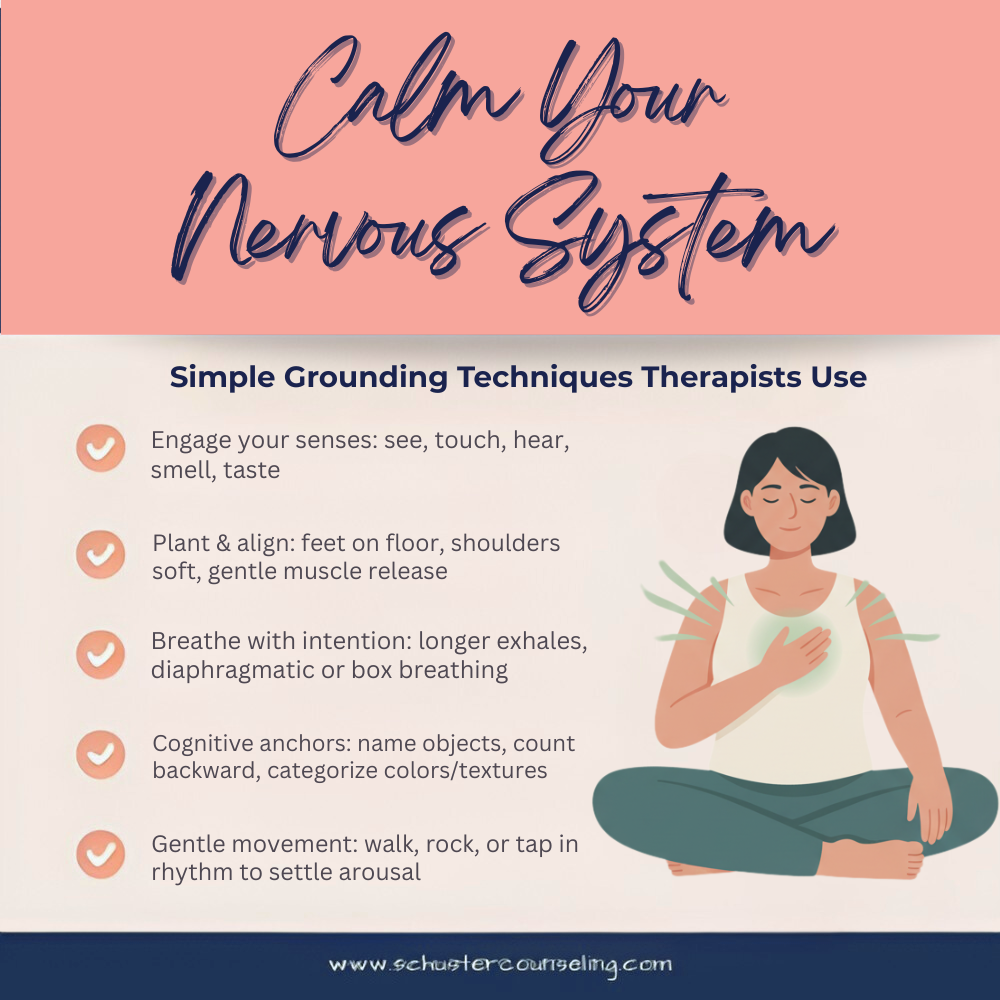
Grounding Techniques Therapists Use to Calm the Nervous System
Grounding techniques can help you calm the nervous system and regain focus. Learn trauma-informed methods using senses, posture, breath, and movement to restore balance and resilience.
Why Depression Isn’t Laziness: A Trauma-Informed Perspective
Depression often looks like laziness, but it’s actually a nervous system response to chronic stress or trauma. This trauma-informed perspective explains why shutdown, fatigue, and numbness happen—and how to rebuild energy and motivation safely.
Reconnecting After Burnout: Healing Emotional Exhaustion Through IFS
Burnout isn’t a flaw—it’s your inner parts working overtime to protect you. Through an IFS lens, you can meet the hustler, shutdown, and critic parts with curiosity, rebuild Self-leadership, and use simple somatic anchors and micro-boundaries to restore calm and sustainable energy.

Understanding the Window of Tolerance: Regulating Anxiety and Overwhelm
Your nervous system isn’t your enemy—it’s a guide. By learning to notice early signs of stress and using simple grounding tools, you can return to calm more easily and stay centered through daily challenges.

Healing Your Relationship With Food After Bariatric Surgery
Post-bariatric surgery, eating can feel confusing—but your body can be retrained. Discover gentle nutrition, mindful eating, and emotional coping strategies that restore safety, satisfaction, and freedom with food.

Why Bariatric Counseling Should Be Part of Every Post-Op Plan
Weight loss surgery transforms your body, but what about your mind? Post-op life brings unexpected emotions, identity shifts, and challenges that the scale can’t measure. Bariatric counseling helps you navigate cravings, body changes, and the pressure to “have it all together,” offering the long-term support every patient deserves.